That scary letter you got after closing? It's probably junk.
Photo by Brett Garwood on Unsplash
You just closed on your home. Congrats! Now brace yourself for the mailbox onslaught.
Within days of your closing, you'll start getting letters that look urgent, official, and downright alarming. "Final Notice." "Response Requested." "Failure to act may result in..." They know your name, your address, and sometimes even your lender's name. It feels like something you should deal with right away.
Don't panic. Most of it is junk. And some of it is designed to scare you into spending money you don't need to spend.
How do they know who you are?
When you buy a home, the transaction becomes public record. Your name, address, purchase price, and lender information are all filed with the county. Companies scrape this data and use it to target new homeowners with time-sensitive looking offers. They know you just closed, and they're counting on you being overwhelmed enough to not ask questions.
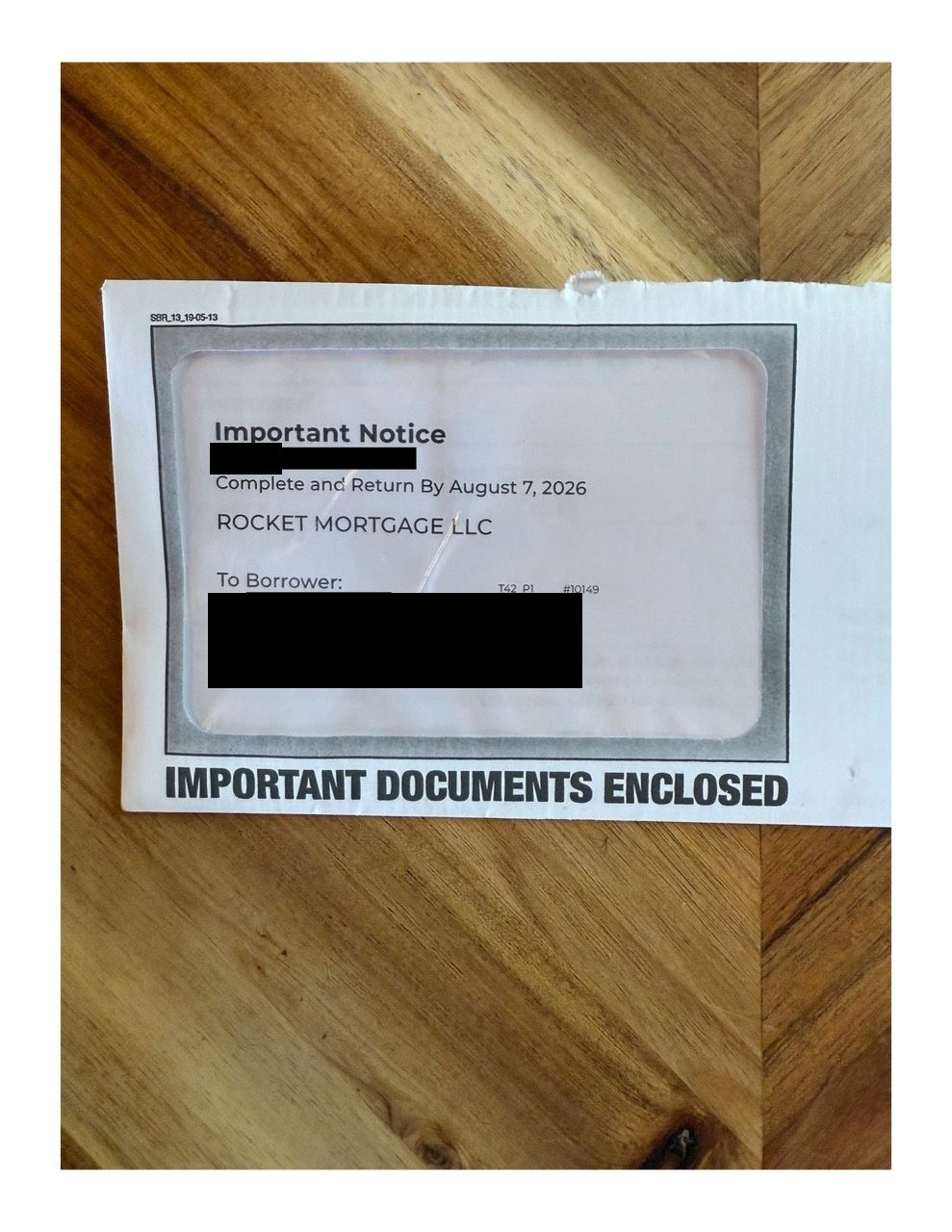
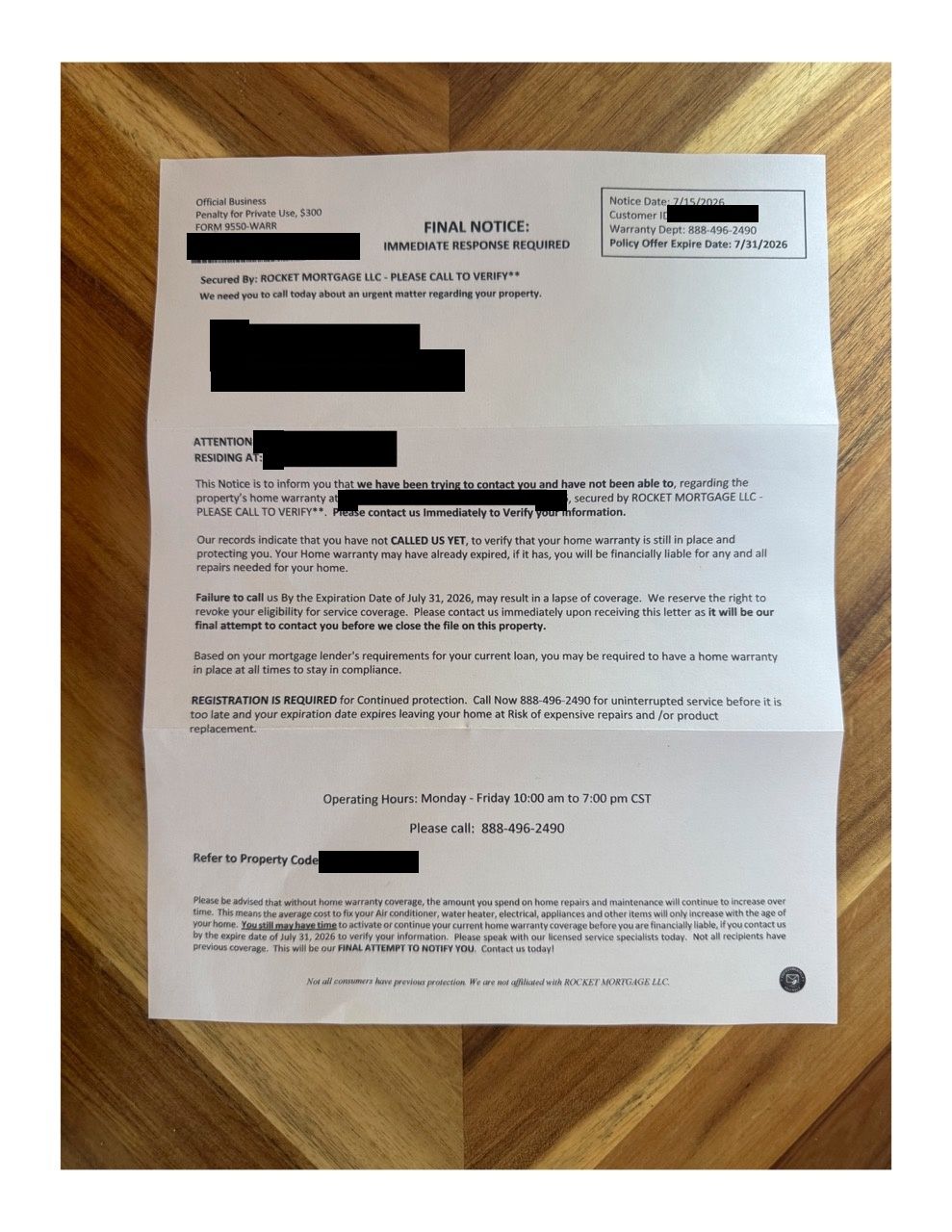
The "Final Notice" home warranty letter
This is one of the most common ones. We recently saw a letter that hit a client's mailbox, and it's a perfect example of how these work.
The letter came from a company called "Fenix Protect," and at first glance, it looked like it could be from a government agency or their lender. It was labeled "Official Business, Home Warranty Division" with a bold "Final Notice" at the top. It referenced the homeowner by name, included the property address, and even noted "Private Lender Information."
The language was aggressive: "It is imperative you contact our office," "this will be our final attempt," and "failure to call... could result in you being liable for all costs associated with any home repairs."
Scary stuff, right?
Now look at the fine print. At the very bottom, in the smallest text on the page: "Not all consumers have previous coverage. We are not affiliated with your current mortgage holder."
That one sentence tells you everything. They have no relationship with you, your lender, or your loan. They bought your information from public records and sent you a letter designed to look like something you're obligated to respond to. You're not.
"Protect your deed" offers
Another popular one. You'll get letters warning you that someone could steal your home's title and take out loans against your property. For a monthly fee, they'll "monitor" your deed for you.
Here's the thing: your county recorder's office already tracks deed changes. You can check this yourself for free. Title fraud exists, but it's exceedingly rare for owner-occupied homes, and your title insurance (which you already paid for at closing) provides protection. Paying a monthly fee to a third party to watch a public database on your behalf is usually not worth it.
Mortgage protection plan letters
These are the ones that fool people most often, because they look the least like advertising.
You'll get something headed "Mortgage Protection Plan Notification" or "Final Mortgage Notice." It has a form number. It lists your lender, your loan amount, and a reference to the county courthouse where your deed was recorded. There's a respond-by date and a postage paid reply envelope.
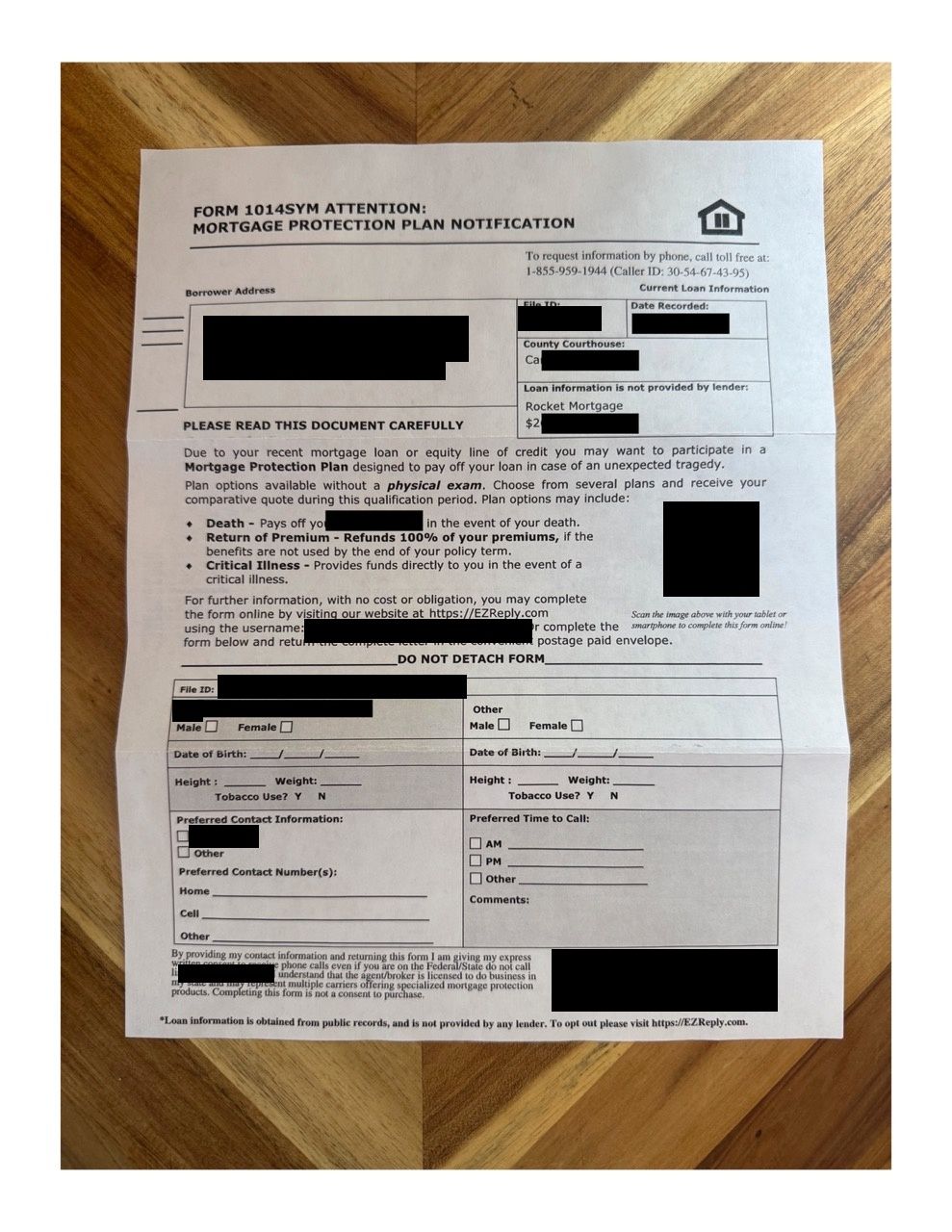
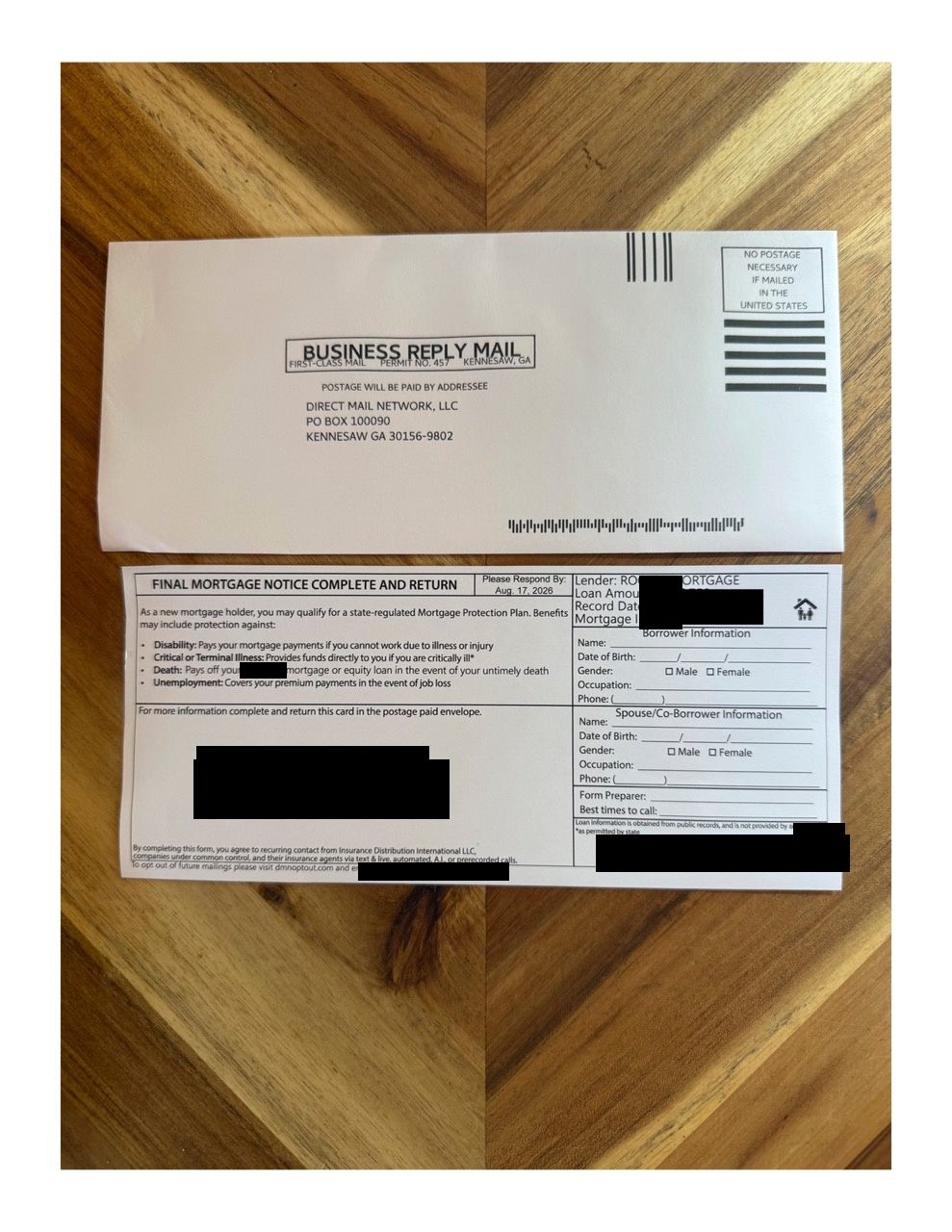
What's actually being sold is life insurance. Mortgage protection insurance is a real product, and for some families it makes sense. But nothing about these letters is a notice, and nothing about them is required. The form number is made up by the mailer. The respond-by date is made up. The loan details came from the same public records everyone else is pulling.
Look at what the tear-off form asks for: date of birth, height, weight, gender, tobacco use. That information goes to a licensed insurance agent who will call you. Read the consent line in the fine print and you'll usually find you're agreeing to automated and prerecorded calls even if you're on the do not call list.
If you want life insurance tied to your mortgage balance, that's a reasonable thing to look into. Talk to an insurance agent you picked, compare a term policy against what these plans offer, and do it on your own timeline. Don't let a letter with a fake deadline pick the agent for you.
Mortgage refinance solicitations
These come fast too. Letters that look like they're from your actual lender, offering to lower your rate or restructure your loan. Some even include fake "account numbers" to make them seem legitimate.
If you want to explore refinancing at any point, call us. We'll give you a straight answer about whether it actually makes sense for your situation. Don't call the number on a random letter.
How to spot the junk
Most of these letters share the same playbook:
Urgent deadlines. "You must respond within 5 days." Real notices from your lender or servicer won't use this kind of pressure.
Vague authority. "Official Business" or "Home Warranty Division" printed at the top with no clear company identity. They want you to assume it's from someone important.
Threats of consequences. "Failure to act may result in..." followed by something scary. A warranty company can't hold you liable for anything. You never signed up with them in the first place.
The fine print gives it away. Every single one of these letters includes a disclaimer, usually at the very bottom in tiny text, that admits they're not affiliated with your lender, servicer, or anyone involved in your loan. Read it. That's where the truth lives.
What should you actually do?
Shred and move on. If it looks like junk, it probably is. Give the fine print a quick scan to confirm, then toss it.
Don't call the number. Calling confirms your information is active and may result in more aggressive follow-ups.
Call us if you're not sure. Seriously. If you get something in the mail and you're not sure whether it's real, send it our way. We'd rather take two minutes to tell you it's junk than have you sign up for something you don't need. That's what we're here for.
Your home warranty, your deed, and your mortgage are all in good shape after closing. Don't let a scare-tactic letter convince you otherwise.
Have a question about something you received in the mail? Schedule a call with us and we'll take a look.
Any examples, rates, or payment amounts shown are for illustrative purposes only and may not reflect current market conditions.
Please refer to our advertising disclosures for more information.
Written by

Alec Baker
Co-Founder & COO
Alec handles business operations and leads our technology innovation to revolutionize your loan process.
View profile"Great team! They were extremely helpful in explaining our financing options. Always responded quickly to questions. The whole process of securing our mortgage was fast and painless."

Quickstart the process
Get the confidence and clarity you deserve.
Ready to get started? Schedule a call for expert mortgage guidance, or go straight to the application.
